Markets & Justice

Markets & Justice
Freely operating markets yield a just outcome?

White Australia Has A Black History

White Australia Has A Black History
Showing posts with label Slavery. Show all posts

Friday, 15 January 2016

Slavery is alive and well and living in Australia - bringing produce to your dining table. Comfortable with that?


Everything old is new again it would seem.

Blackbirding is the coercion of people through trickery and kidnapping to work as labourers. From the 1860s, blackbirding ships in the Pacific sought workers to mine the guano deposits on the Chincha Islands in Peru.[2] In the 1870s, the blackbirding trade focused on supplying labourers to plantations, particularly the sugar cane plantations of Queensland and Fiji.[3][4] The first documented practice of a major blackbirding industry for sugar cane labourers occurred between 1842 and 1904. Those "blackbirded" were recruited from the indigenous populations of nearby Pacific islands or northern Queensland. In the early days of the pearling industry in Western Australia at Nickol Bay and Broome, local Aborigines were blackbirded from the surrounding areas.
Blackbirding has continued to the present day in developing countries. One example is the kidnapping and coercion at gunpoint of indigenous people in Central America to work as plantation labourers in the region, where they are exposed to heavy pesticide loads and do backbreaking work for very little pay.[5] (from Wikipedia)

~~~~~~~~~

I have known about blackbirding.  I grew up in the North Queensland town of Bowen.  Bowen - as is the case with many coastal towns in Queensland - had/has a significant population of Pacific Island descendants.  My best friend at school was a Vanuatu descendant.  Her cousin is a good friend as well. So when I read headlines such as this below it brings a shiver to my bones.  


Read more: http://www.brisbanetimes.com.au/business/workplace-relations/queensland-labour-company-allegedly-left-fruit-pickers-from-vanuatu-without-pay-20160112-gm4or5.html#ixzz3xFq2Ok4H 
Follow us: @brisbanetimes on Twitter | brisbanetimes on Facebook

....and if you don't know how close to home this is for Victorians>>>

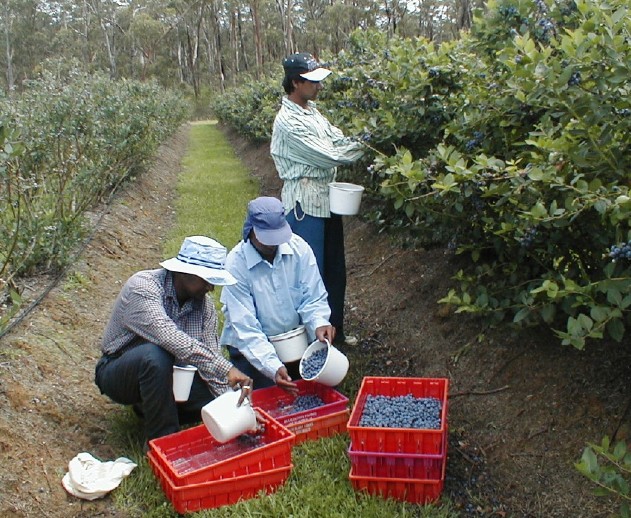
Australia welcomes island fruit pickers

A trial seasonal workers scheme will aid farmers short on produce pickers in New South Wales
Australia welcomes island fruit pickers

RELATED ARTICLES

Atrial Federal Government seasonal workers scheme begins today in Australia, with 50 Tongans flying into the Riverina and Robinvale areas of New South Wales to aid farmers with fruit picking.
The workers will remain in the region for seven months, and will be joined by pickers from Vanuatu, Kiribati and Papua New Guinea when labour hire companies have completed all requirements, the Sydney Morning Herald reported.
Following the trial period, which will see farmers pay for half of the workers' air fares, 2,400 seasonal work visas will become available from July.
"The first group will fly to Sydney and they will help with the harvest of almonds at Robinvale," said Sitiveni Finau, Tonga's Deputy Secretary (labour division). "We will have more workers coming later."


If you are not aware of the modern forms of slavery,
particularly the forms of slavery taking place in modern democratic nations like Australia,

And please be aware -
slavery is alive and well and living in Australia

Australia is not immune to the risks of labour trafficking; labour shortages, sector tolerance to illegal work practices and the recruitment of vulnerable workers can result in labour exploitation (David 2010). The horticultural sector in Australia is experiencing some of these risks and Pacific Islanders are a vulnerable migrant group working in this sector.
Australia’s Pacific Seasonal Worker Pilot Scheme (PSWPS) aims to create a safe pathway for unskilled or low-skilled Pacific Islanders to temporarily work in Australia’s horticultural sector. Recent research by the AIC suggests that addressing labour trafficking does not just involve prosecuting the most extreme cases but should also have a focus on preventing and reducing a broader spectrum of practices that create an environment that is tolerant, or even encouraging, of exploitation (David 2010). While the PSWPS is not an anti-trafficking program, it has been designed and piloted to prevent a broad spectrum of poor or illegal labour practices and therefore may assist to prevent labour trafficking in Australia and regionally. This paper provides an analysis of the PSWPS and examines emerging evidence about how the program manages risks of exploitation of overseas temporary workers from the Pacific Islands.

Wednesday, 13 January 2016

Consumer question of the day --- do you do know what FMCG stands for?

Fast-moving consumer goods (FMCG) or consumer packaged goods (CPG) are products that are sold quickly and at relatively low cost. Examples include non-durable goods such as soft drinks, toiletries, over-the-counter drugs, processed foods and many other consumables.[1][2]

In contrast, durable goods or major appliances such as kitchen appliances are generally replaced over a period of several years. The term was coined by Neil H. Borden in The Concept of the Marketing Mix in 1965 (1996, Prentice-Hall, Inc.).
FMCG have a short shelf life, either as a result of high consumer demand or because the product deteriorates rapidly. Some FMCGs, such as meat, fruits and vegetables, dairy products, and baked goods, are highly perishable. Other goods, such as alcohol, toiletries, pre-packaged foods, soft drinks, and cleaning products, have high turnover rates.
Though the profit margin made on FMCG products is relatively small (more so for retailers than the producers/suppliers), they are generally sold in large quantities; thus, the cumulative profit on such products can be substantial. FMCG is probably the most classic case of low margin and high volume business. (This information is from Wikipedia)
To be a pro-active consumer has always taken quite a bit of thought. 

Consumer boycotts have a long history:
1.   Boycotts as we know them today began in the nineteenth century and had quite an effect.
2.   In modern times, we are concerned about what is being added to or put into the food we purchase. As well, we are concerned about chemicals in our cleaning products and our cosmetics.

3.   We are concerned about animal welfare - cruelty, experimental research etc., lack of humane guidelines for industrial animals.  

4.   Some of us, but not enough, want to purchase Australian products.  The time has long since gone (probably late 1960s/early 1970s) when a consumer could purchase in a supermarket a trolley full of products which were produced wholly in Australia by Australian labour employed by Australian-owned companies.  

5.   Labelling is often far from truthful and/or transparent.  Major powerful food and grocery organisations such as the Australian Food & Grocery Council lobby strongly against simpler and easily understood labelling which is honest about point of origin.  So one is left to think that in the confusion there is profit!  Perhaps even an escape from Australian standards?

6.  Consumers in the 21st century have now to be conscious of Fair Trade and trade in goods produced by forced, exploited and/or slave labour --- even when those goods are made in Australia.
Major corporations are not necessarily cleanskins on this issue.  Some of these are multi-national corporations who do one thing in Australia and another in countries where they can get away with less stringent watchfulness and where consumers are unable to demand high standards.

There are no consumer visits to the Nestle factory in Tongala.
The person interested in how these well-known commonly used products
and would like to see how they are produced -
well, you won't get past the reception office and the security there.
Considering that generations of Australians have been supporting
the Tongala community, this seems a bit rich.


Faith fighting slavery - right here in Australia

IMG_3303
Fighting Slavery with Faith
Despite being outlawed nearly 150 years ago, modern day slavery is a billion dollar industry that affects millions of people in countries around the world – including right here in Australia.
Right now in Australia there are an estimated 3,000 people are currently in slavery or slave-like conditions. This practice is thriving and we, as ordinary everyday Australians, may even be unknowingly supporting it.
Unfortunately, Australia’s decade-long focus on slavery-like conditions in the sex industry has made us blind to the growing and systemic exploitation of people that has firmly taken root in the rest of our economy. International students, backpackers, 457 and other temporary visa holders seeking legitimate opportunities arrive here only to find themselves exploited for profit and forced to work against their will.
For too long we have turned a blind eye to the many different facets of slavery, which has allowed widespread labour exploitation to flourish. The reality is that slaves are cooking our food, cleaning our offices, packing our meat, picking our vegetables, running shops, tiling our bathrooms – and the list goes on.
It’s inconceivable that slavery still exists in 2015, let alone prospers in a developed nation like Australia. That is why it is imperative that government, religious and community groups work together to help eradicate this system that has no place in the modern world.
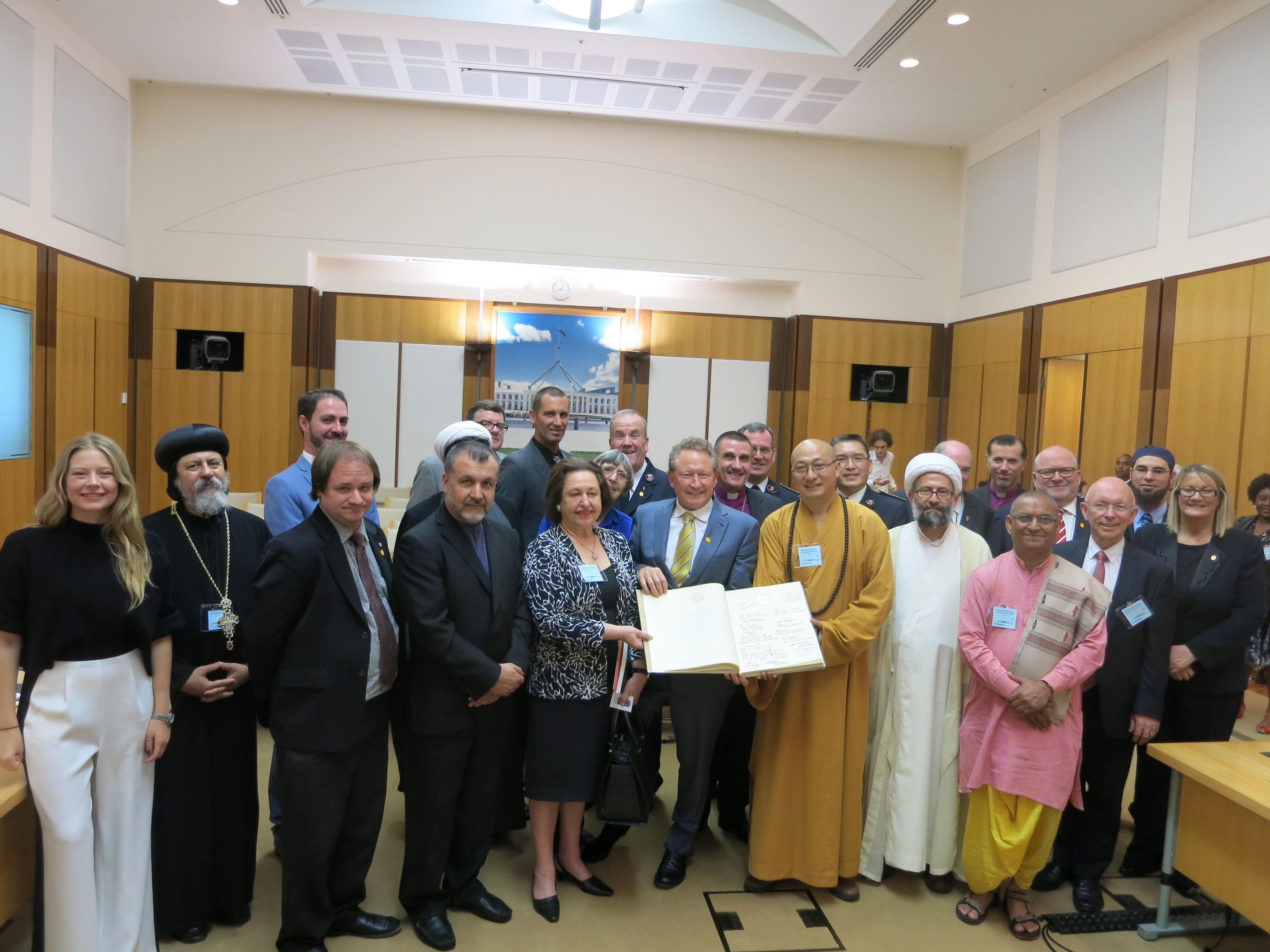
Today is International Day for the Abolition of Slavery ( 2 December 2015) and  senior faith leaders will gather in Canberra at Parliament House to launch the Australian Freedom Network. The Australian Freedom Network will bring together the faith communities of Australia to make a public commitment to develop practical actions to eradicate modern slavery in our nation.
The Salvation Army’s trafficking and slavery safe house continues to support many enslaved people whose stories do not feature in the headlines. Sandra, a Freedom Advocate and survivor, is just one example of someone who was promised a better life in Australia only to be stripped of her autonomy.
Sandra was enslaved as a domestic worker in suburban Sydney for three years without pay after being promised a wage and permanent residency in Australia.  Her slaveholders organised her travel to Australia, confiscated her passport and isolated her from the outside world whilst extracting her labour 24 hours a day 7 days per week.
They denied her health care, contact with her family and treated her as an object for their use and abuse.
“I thought I had been abandoned by God,” she has said.
Eventually, Sandra made the brave decision to ask someone for help and take a leap of faith into the unknown consequences of that decision.  As a result, she made her way to The Salvation Army and is now an Australian citizen.
Even though Sandra’s slaveholders were not criminally prosecuted, we should still view her story as a success. Ultimately, since finding freedom she has been able to obtain purposeful work and is now an advocate for other survivors. She has shared her story so that we can all benefit from her experiences and insights.
Australian faith leaders have the opportunity create meaningful pathways out of slavery and into a situation of safety, choice and control. But like the wider community, our faith communities lack awareness of the scale and scope to which they may contribute to the enslavement of other people via products and services they use and consume.
Every day individuals purchase goods and services our workplaces and organisations may also use services that may be contributing to the exploitation and slavery of other human beings.
And, so, we are compelled by our faiths to call for transparency and accountability in corporate supply chains. We must do this until we all can be assured that the profits generated by free markets and free trade adequately evidence the production of goods and services by people who are free and being paid a living wage both here and overseas.  This includes people whose migration status or visa conditions are being used to abuse their rights.
With the launch of the Australian Freedom Network, Australian faith leaders will send a clear message that slavery in all of its forms is not condoned by religion and we stand collectively against forced labour, human trafficking, debt bondage, servitude, servile and forced marriage.
Amongst our faith communities there is also hope, care and support for people who have experienced slavery to reclaim their freedom.  And our message for those who are still enslaved in Australia: “you are not alone.”
James Condon, Commissioner
The Salvation Army Eastern Territory

Tuesday, 12 January 2016

Workplace exploitation of varying degrees in Australia - and how workers are becoming more vulnerable day by day.

Coworkerpic_FINAL_medium.jpg

Mark Zirnsak is Victorian and Tasmanian social justice spokesman, Uniting Church; Heather Moore is national policy and advocacy co-ordinator, The Freedom Partnership – End Modern Slavery, The Salvation Army.

Mark and Heather have written a most enlightening article for The Age.  People not involved in employee organisations might be surprised at how often even otherwise good employers might end up in breach of award wages and conditions - which form part of the industrial laws of Australia.  The employers referred to are otherwise good employers who have not set out to defraud or exploit their employees.

Then there are the careless employers.  These are the ones who are ill-informed, ill-educated perhaps who don't try to bring their standards up to anywhere near professional.  They probably would not know what an award was if it bit them in their painful parts.  Their employees are probably offered cash in hand instead of penalty rates and as for a time and wages record - what's that and why bother!

Then there are the third group of employers.  The ones who deliberately set out to defraud and exploit working people.  The proliferation of labour hire companies in modern Australia has made it very easy for fraudsters and exploiters to multiply to the detriment of human society.  In modern Australia, human trafficking continues across a wide number of industries - and in a manner not seen until recently.  Go here to find a number of posts relating to the revelations of human trafficking and exploitation in agriculture in Australia made public last year on ABC's Four Corners. 2015 saw the revelations relating to oppression in the 7-Eleven petrol/convenience store chain.

As Adele Ferguson points out in her article:
With 1.3 million workers in Australia on visas, equivalent to one in 10 of the workforce, it has wider economic implications. Besides undermining the award system, it is potentially robbing the Australian Taxation Office of hundreds of millions of dollars a year in tax.

Please note the last sentence because at this point in time the Turnbull Government is indulging in all sorts of cost cutting which will impact widely the most vulnerable Australians.

More could be said of sex slavery in Australia; and of poor Occupational Health & Safety training and conditions which result in severe injuries and even death across many industries; and of the regular exploitation of the 457 system by some employers. 457s are the regulations which allow employers to bring to Australia foreign workers.

Australia has relied strongly over the last century on trade unions and trade union membership to look after the exploited.  However, as Australia enters the 21st Century, union membership and participation has declined and the political situation is such that conservative governments try their best to undermine the union movement. A middle-class Labor movement has not helped the situation either.

So if union power and influence declines and governments will not provide appropriate levels of resources for government instrumentalities who have the purview of a variety of workplace practices, then workplace ethics and practices overall will be at best 'iffy' and at worst a form of slavery ... and there will be widespread exploitation in between these extremes. 

Read more: http://www.smh.com.au/business/workplace-relations/worker-exploitation-destroys-the-economy-20151001-gjz2sn.html#ixzz3wvRCIfso 
Follow us: @smh on Twitter | sydneymorningherald on Facebook


Read more: http://www.theage.com.au/comment/worker-exploitation-head-20160109-gm2fgq.html#ixzz3wvM3koS7 

Wednesday, 25 November 2015

Highlighting companies' role in fight against slavery and human trafficking

Posted on: November 20, 2015 2:36 PM
Human trafficking in Brazil: Bolivian migrants working in slave labour conditions in Sao Paulo having been tricked by recruiters.
Photo Credit: United Society (Us)
[ACNS, by Gavin Drake] A leading Anglican mission agency is calling for companies to appoint an individual board member with responsibility for Corporate Social Responsibility (CSR) to ensure that the company – and its suppliers and partners – comply with human rights; particularly in the area of modern slavery and human trafficking.

The United Society (Us) has teamed up with Finance Against Trafficking, the Ecumenical Council for Corporate Responsibility (ECCR) and Rathbone Greenbank Investments to produce a report looking at the risks of human trafficking in the supply chains of FTSE 100 companies.

The FTSE 100 companies are the top 100 companies traded on the London Stock Exchange and have a combined value of £1,700 billion. Together, they account for 80 per cent of the market capitalisation of all listed UK companies.

Under new regulations introduced in the Modern Slavery Act 2015, such companies must now produce an annual statement setting out the steps it has taken to ensure that slavery and human trafficking is not taking place in any of its supply chains or in any part of its own business. Alternatively, the company can issue a statement saying that it has taken no such steps.

Such a statement can include information about the company’s policies in relation to slavery and human trafficking; and its due diligence in relation to slavery and human trafficking in its business and supply chains; together with its effectiveness in ensuring that slavery and human trafficking is not taking place in its business or supply chains.

The statements will be publicly available and companies will have an obligation to publish them prominently on their websites.
The report produced by Us and its partners is intended to provide guidance to such companies. It includes information about the risks that such companies can face in unwittingly benefiting from slavery and trafficking. It also highlighted poor examples of company’s current reporting practices.

“Some companies made no mention of either forced labour or human trafficking as a potential risk nor detailed any actions or measures that would deal with it,” the report says. “Many of the companies mention human rights policies and their compliance with these policies, but often only in terms of equal opportunity or freedom of association. There is little disclosure or evaluation of human rights risks in their supply chains -
“We found examples of businesses reporting on one aspect of their supply chain, whilst remaining silent on other aspects. For instance, a company may have paid close attention to just one out of a number of potentially high-risk commodities used to manufacture its products. Such instances show inconsistency and a lack of overall transparency in reporting which makes it difficult to assess the credibility of their disclosure.”

The report summarises a number of weaknesses found in relation to the reporting of human trafficking and forced labour risks within certain sectors. “For the companies in the textiles industry, no information was provided on how inclusion of forced labour prohibition within Codes of Conduct is being implemented. For companies sourcing seafood there was minimal disclosure of the risks and there was a comprehensive lack of company information on the issues.

“For companies with gold in their supply chain, whilst forced labour was mentioned in company policies, there was no specific mention of human trafficking risks. There was no mention of the risks within gold supply chains in banking sustainability reports. For companies in the travel & leisure industry, there was no mention of the risks that staff may not recognise trafficking operations on company premises nor the potential for third party agencies to exploit migrant workers.

“We found that risks that are prevalent on an industry-wide level tend to be dealt with in a more transparent way by companies within the industries (though this varies from company to company), with some information given on action that is being taken to address the risk. On the other hand, specific risks which can affect a company, for example a commodity to which the company has exposure, tend not to be addressed clearly within reporting, if at all.”

The 50-page report isn’t a catalogue of errors and contains numerous examples of best practice. In the Jewellery trade, it highlights the work undertaken by Tiffany & Co: “The company details the risk posed by ‘conflict diamonds’ in which diamonds are mined with proceeds used to finance conflict and war, which involve human rights abuses and exploitation.

“In 2014 the company claimed to have received 100% of its rough diamonds either directly from a known mine or from a supplier with multiple known mines. The company cuts and polishes the diamonds in-house, mostly in the location from which they are sourced, with strict policies on fair wages for employees and a focus on developing a skilled workforce with sustainable incomes which benefit the community as a whole.”

The Archbishop of Canterbury, Justin Welby, has welcomed the report. “Modern slavery is a scourge that grossly undermines the inherent and God-given dignity of the human, and we must work urgently to eradicate it from our world,” he said. “This report highlights that in our globalised economy, any business can be exposed to slavery through its supply chain.
“Companies that have conducted audits have been shocked to discover that they have been unwitting beneficiaries of slave labour. The transparency in supply chains measure in the Modern Slavery Act is a call to action that I urge British business to seize.”

His words were echoed by the Roman Catholic Cardinal Archbishop of Westminster, Monsignor Vincent Nichols: “Transparency in the supply chain and measures that prevent modern slavery and exploitation in business will help to change cultures to ensure that human dignity is protected in the workplace,” he said.
“The measurement of business success cannot be limited to profit margins. It has to be how we treat our fellow human being. The FTSE 100, having taken a clear position of respecting and protecting all workers linked to their supply chains, demonstrates how attitudes can change to create a better society, particularly for the poor and vulnerable who depend on their employers.”

US partner churches have examples of people within their communities who have survived and escaped being trafficked, while many more continue to endure forms of slavery,” the mission agency’s director for global relations, Rachel Parry, said.
“It is easy to forget that we are all ‘investors’ in systems and businesses which can, through complex and distant supply chains, be connected to trafficking. This research considers how companies might be exposed to trafficking in their supply chains and suggests ways in which such risks can be managed and minimised.
“For those concerned about investing ethically, the report gives guidance on questions that investors could ask investment managers or companies regarding these risks. Companies need to improve their efforts to monitor and manage their supply chains. This report gives some practical guidance about how better to go about this.”

Bishop Michael Doe, chair of the ECCR, said: “In a recent survey, over 70 per cent said they would be unhappy if their money was invested in unethical business. That figure would be even higher if they found they were profiting from abusive labour practices and the treatment of people, including children, which amounts to present day slavery.
“All of us, and especially those of us who believe that every person is created equal with the right to a free and fulfilling life, need to know more and to act more decisively. That is what this report can help us to do.”

The report, “Forced Labour, Human Trafficking & The FTSE 100” can be downloaded from the WeAreUs website. (PDF)

Sunday, 18 October 2015

To-day is Anti-Slavery Day : Australia's first ever free anti-slavery training course online from Uni of NSW starts on Oct 22


To find out more about Anti-Slavery Australia
please go here

To-day, 18 October, is Anti-Slavery Day

Anti-Slavery Day,created in 2010 by an Act of Parliament in Britain, aims to raise awareness of modern-day slaver and to inspire people to do what they can to eliminate it. The bill defines modern-day slavery as child trafficking, forced labour, domestic servitude and trafficking for sexual exploitation.

This day is championed by Anti-Slavery International which, founded in 1839, is the world's oldest international human rights organisation and the only charity in the United Kingdom to work exclusively against slavery.  

18 October: Anti-Slavery Day

Anti-Slavery Day, created in 2010 by an Act of Parliament in Britain, aims to raise awareness of modern-day slavery and to inspire people to do what they can to eliminate it. The bill defines modern-day slavery as child trafficking, forced labour, domestic servitude and trafficking for sexual exploitation.


Hear Anti-Slavery Australia Director Jennifer Burn talk about forced marriage in this 1800RESPECT webinar next Thursday 22 October
Register here: http://www2.redbackconferencing.com.au/1800Respect22Oct2015 
Posted by Anti-Slavery Project on Wednesday, 14 October 2015

Saturday, 27 June 2015

Singing in the face of adversity, fanaticism, terrorism, bigotry and hatred

What to do in the face of fanaticism, terrorism, bigotry and hatred? This morning I have seen on television the most wondrous thing - the President of the USA leading a funeral congregation, in their sadness, in song. You can see that he starts off spontaneously and slowly and then vigorously all around him join in until everyone is singing loudly and vigorously. And the song? That is the other phenomenal thing. This would have been a congregation of people who, largely, would have been descended from people brought in the chains of slavery from Africa. And the song? Amazing Grace --- a song written by John Newton who had a history of being heavily involved in the slave trade. John Newton was converted in heart and soul. He became an Anglican cleric. So let's continue to sing as we stare down the face of horror, bigotry and hatred; the face of those who would tear their fellow humans down and press them face down into the dirt. Let Grace reign in our lives.

Friday, 29 May 2015

Tweeter of the Week - James O'Brien - History of Sugar Slavery in Queensland

Dear Advocates - Advocacy is starting a series to-day >>> Tweeter of the Week.
Each Friday, the Editor hopes to bring you someone 
who tweets consistently on topics of interest to Advocates.
It would be good if you could find time 
to appreciate the Tweeter of the Week
in the best possible way......
by following him, her, them or it!

To introduce all this, Advocacy presents 


Tuesday, 19 May 2015

Senate Inquiry into slave and exploited labour in Australia's fresh food chain. Woolworths admits moral responsibility but not legal responsibility.

Cross-posted with The Network

NUW National Union of WorkersUNITY IS STRENGTH Call 1300 275 689

Today saw NUW members speak at the first Senate Inquiry into Australia's temporary work visas. The NUW remains firm:
  • Coles and Woolworths have the power to fix this
  • Labour hire agencies need to be regulated
  • No workers should be forced to work for poverty wages in our fresh food supply chain
  • We cannot allow a two-class system to remain in Australia. Every worker counts!
Woolworths also appeared at today's Senate Inquiry, and admitted moral responsibility for underpaid farm workers.

However, Woolworths are still refusing to meet with workers and the NUW to talk about a Fair Food Agreement to eradicate exploitation from our fresh food. Help put the pressure on and sign the petition here!

And remember, we all have friends and family that can help. Share this petition with your community.

NUW's Godfrey Moase, Winnie Lin, Caterina Cinanni, Sherry Huang & George Robertson with Senator Sue Lines & Senator Deborah O'Neill

If you haven't watched the Four Corners program that exposed exploitation, you can watch it here. In unity,
Tim Kennedy
National Secretary
National Union of Workers
Email: nuwassist@nuw.org.au
Call: 1300 275 689
National: 833 Bourke St, Docklands VIC 3008
Click here for office locations
Website: www.nuw.org.au

© Copyright National Union of Workers


Previous posts referencing this topic 
can be found on The Network site at:

Part 1 - Slavery in Australia. Is the 'Let 'er rip" attitude on visas for overseas workers going to be stopped? The Robinvale experience

Part 2 - Names have been named in "Slaving Away".  Here they are recorded below and their responses.

Part 3: The conscious consumer becomes the aware and ethical shopper.  Destroy the slavers from the checkouts of Australia!

What are you buying? How did it get to you?  Whose hands has it passed through?